Monday, March 31, 2014

My ACS Dallas experience

Since this blog is also my diary, I thought it would be a good idea to write down the talks I have been to at ACS Dallas this year. 


First of all, it was the greatest experience I have had as an undergrad. I have seen so many great chemists and I had the chance to listen to some of them. Unfortunately, we left the meeting on Tuesday at noon, so, I missed many great talks. 

X-ray fluorescence imaging and metalloproteomics: Tying images of metals in cells to the proteins that bind them
Lydia Finney

Metal-halogen secondary bonding in iron(II), cobalt(II), and nickel(II) 2,6-dihalophenolate complexes: Insights into the substrate specificity of the hydroquinone dioxygenase PcpA
Timothy E Machonkin, Monica Boshart, Jeremy Schofield, Patrick L Holland, Dalia Rokhsana.


Phosphoryl transfer enzymes: Theoretical studies of native enzymes and ground-state and transition-state analogs
Charles Edwin Webster, Katherine N. Leigh, Roger G. Letterman, Nathan J. DeYonker.


Reversible pyranopterin cyclization in synthetic models of the molybdenum cofactor
Benjamin R. Williams, Sharon J. N. Burgmayer, Anna Kalinsky, Yichun Fu.


Nitric oxide reactivity of the site-differentiated cluster [Fe4S4(LS3)L']2
Eric Victor, Stephen J Lippard.


Bimetallic complexes of rhodium dibenzotetramethylaza[14]annulene ((tmtaa)Rh): Structure, reactivity, and thermodynamic studies
Bradford B Wayland, Gregory H Imler.


Synthetic analogs for reduced [2Fe-2S] cofactors and for Rieske centers
Franc Meyer, Antonia Albers, Serhiy Demeshko, Sebastian Dechert, Eckhard Bill.

Bioinorganic meets organometallic: A tetracarbene-oxoiron(IV) complex
Franc Meyer, Steffen Meyer, Iris Klawitter, Serhiy Demeshko, Eckhard Bill, Oliver Krahe, Frank Neese

Controlling catalytic processes through ligand design
Robert H. Grubbs

Catalytic additions of O-H, N-H and C-H bonds to alkenes
John F Hartwig

Reactivity of the coinage metals beyond electrophilic activation of n systems
Didier Bourissou, Abderrahmane Amgoune, Maximilian Joost.

Fixing nitrogen with iron complexes
Jonas C Peters, John S Anderson, John Rittle, Sidney E Creutz.

Redox non-innocent nacnac and pyridine-imine chelate complexes of first row metals
Peter T Wolczanski, Valerie A Williams, Wesley D Morris, Brian M Lindley, Brian P Jacobs, Thomas R Cundari, Karsten Meyer.

Design of new ancillary ligands with nitrogen and phosphorus donors
Michael D. Fryzuk, Truman C. Wambach, Fraser Pick, Tatsuya Suzuki.

Power curves of buried junction photoelectrochemical cells
Daniel G Nocera

Determining electronic configuration of diruthenium compounds: Coupling crystallography with magnetic studies
Carlos A Murillo

Small HOMO-LUMO energy gap favors the chemistry of low valent silicon and transition metals
Herbert W. Roesky

Phosphorus chemistry and Lewis acid catalysis
Douglas W Stephan

Werner complexes: A new class of chiral hydrogen bond donorcatalysts for enantioselective organic reactions
John A Gladysz

Nickel complexes of electron rich PCP pincer ligands: Bond activation and catalysis
Warren Piers, Dmitry Gutsulyak, Javier Borau-Garcia, Etienne LaPierre, Masood Parvez.

Tantalum and niobium methylidenes
Daniel J Mindiola, Keith Searles.

Anion complexation and sensing with organoantimony compounds
Francois P. Gabbai

Copper-oxygen intermediates relevant to metalloenzymes and other oxidation catalysts
William Tolman

Tuning of the first- and second-coordination spheres in nonheme iron complexes
David P. Goldberg, Alison C. McQuilken, Sumit Sahu, Leland R. Widger.

Shellfish are inorganic chemists: Characterization and synthetic mimics of marine biological adhesives
Erik Alberts, Courtney Jenkins, Heather Meredith, Michael Johnston, Jessica Roman, Chelsey Del Grosso, Michael North, Natalie Hamada, Jonathan Wilker.

DNA signaling among proteins with iron-sulfur clusters
Jacqueline K Barton

PS : I tried to fix the issues with the list, but I couldn't.


Book: The Annotated and Illustrated Double Helix

I have read The Double Helix and wrote a post about it before. Later, I learned that Alexander Gann and Jan Witkowski prepared this book by adding published and unpublished letters, articles and anectodes. It has ~ 300 pages with lots of photos, notes, corrections and extra information that the first book did not have.


If you haven't read the The Double Helix yet, I think you should read this one. If you are one of those people who have read it, you should still read this one since there is much more information in this book.

Since I have already written a post on the book, I don't want to add much on that one. But, it was surprising for me to learn that the publication of The Double Helix caused many problems in scientific society and especially among Watson's friends and colleagues. Crick wrote a final letter to Watson and you can see it in Appendix 4. I think he made it very clear why Watson should not publish the book. To be honest, I now realize that telling everything about a scientific discovery as a simple "story" might not be a great idea.

Friday, March 14, 2014

Update on Clayden's Organic Chemistry textbook "challenge"

As I mentioned in this post, I am trying to finish reading and understanding Clayden's organic chemistry textbook until the end of May 2014. Thanks to spring break, I was able to gain some more speed and today I have finished Chapter 26. Since there are 53 chapters, I thought it would be nice to write about my studies so far. 

Anyway, as you can understand from my blog's header and posts I am way more interested in inorganic chemistry than organic chemistry. But, organic chemistry knowledge is essential in inorganic chemistry too. Firstly, I want to design and synthesize ligands. In fact, I want to prepare a new AND useful ligand on my own. Without knowing the basics and details of organic chemistry, there is no way I can do this. Moreover, without organic chemistry, there is no way that I can even understand and appreciate the use/synthesis of some ligands that are already published. Having finished  Wade's textbook, I realized that I needed to learn more. Also, I know I am not so good at organic chemistry. So, I decided to be better at it with Clayden's.

First of all, my thoughts about the book mentioned in that post haven't changed. I am not an organic chemist, but as a student (the target reader of the book) I still find the book not organized for my educational purposes. It is very common to come across some reagent, reaction or even a functional group in the early chapters without learning anything about them first. Usually, there is a note saying that "...covered in Chapter X." When I compare it to my favorite organic chemistry textbook (Wade's), I still think this book doesn't follow the usual sequence (from simple to difficult). 

I did every single practice problem in the book. Most of the time, I really enjoyed the problems and I am planning to write some blogposts on some mechanisms. My favorite problems and examples are the ones that give or ask you the mechanisms of real drug syntheses. It's great to see that I can understand and design the same syntheses for some drugs. Organic chemistry is really cool! To my surprise, I was able to do ~70% of the problems without much effort. So, I am better than I had expected. Some problems that involve certain agents were really hard for me. Because, if you don't know which one to choose, you will have to go and seek help in tables or chapters. One thing I realized about myself is that I can make some educational guesses, but when it comes to mechanisms I sometimes choose wrong steps although I can draw the right product in the end. I think some problems have more than one routes, and sometimes I am just wrong but lucky. 

I have never done anything about protecting groups at the school, so Chapter 25 took me a while to understand. It's not hard but it was new to me.

Overall (26 chapters), this book is great and I am sure I will always use this book in my future career.

So, now I am ready to go to ACS Dallas and when I come back, I will go on studying. I also decided to read organic chemistry papers too. Maybe they will help me to pick up some tricks. Also I will be able to see more syntheses. Feel free to suggest me readings too.

By the way I did not give up #chempaperaday. In fact, I still read papers but the point of that challenge was that I had decided to read "extra" papers. Right now, I am only reading inorganic chemistry textbooks, books and publications. So, it won't be fair to post those papers.

Wednesday, March 12, 2014

Notes on Linus Pauling and Magnetic Susceptibility (I)


Linus Pauling is such a big name that whatever text I read, I see his name. He is one of the most important chemists and I truly believe that he deserved at least 3 Nobel Prizes in Chemistry. So, instead of writing a single post about him, I decided to write small pieces as often as I can. After all, there is no way I can tell everything I want to tell about him in one single post. 

I was just reading an inorganic chemistry text and I came across his name at least 10 times in the first 27 pages. Consequently, I decided that it is a good idea to write the most interesting part about him so far.

In early 20th century,  chemists were trying to assign oxidation states to some transition metals and trying to find out the electronic structure of them. They were able to measure the spin. magnetic moments and permanent dipoles of the metal complexes but it was not an easy task to find the correct electronic structure. For example, in 1941, Dwyer and Nyholm prepared several Rhodium complexes and they thought that it was Rh(II). But, they could not understand why the complexes were diamagnetic. Note that Rh(II) has a d7 electron configuration therefore should me paramagnetic and Rh(III) has d6. The answer came in 1960 when it was discovered that the complexes had hydrides and the oxidation state of Rh was three.

Linus Pauling predicted that diamagnetic Ni(II) complexes should be 4 coordinate and at that time this was not observed yet. Later, he also successfully predicted several other geometries for Au(III), Ag(II) and Co(II) complexes. 

He had some unsuccessful predictions too and the most well known of these is his ideas about Vitamin C. Anyway, although his Valence Bond theory is a very successful theory to explain bonding, but for transition metals it was not good enough. I will give the example in the book now.

The magnetic moment of [FeF6]3- is 5.9 Bohr magneton and the moment for  [Fe(CN)6]3- is 1.9 . These suggest that there are 5 and 1 unpaired electrons respectively. In order to explain this, he tried to use Valence Bond Theory and also suggested that the bonding in the first complex was ionic whereas it was covalent for the second complex. 

Better explanations came with Molecular Orbital, Crystal Field and Ligand Field theories. Simply, we now say that F- is a weak field ligand and CN- is a strong field ligand. Therefore, for Fe(III) (d5) in octahedral field the electrons occupy the orbitals like these and give rise to the observed moments:


While at it, I should mention that we can simply calculate the spin only moment by

√n(n+2) 

where n is the number of unpaired electrons. But, because there is also the orbital motion of electrons, another moment is also added to the spin only moments. From my undergrad experience in the tests or practice problems, I saw moments like 2 point something for one unpaired electron etc. So, the experimental values are sometimes very close, sometimes a little bit larger.

So, in theory spin only moments can be summarized in this table:

Number of unpaired electrons
Spin only moment (Bohr magneton)
1 1.73
2 2.83
3 3.87
4 4.91
5 5.92


Tuesday, March 11, 2014

More on metal-ligand bonding

I don't know (yet) if he was the first to think of a pi-bond between a metal and ligand, but I have just read this:

"Atoms of transition groups are not restricted to the formation of single bonds, but can form multiple bonds with electron-accepting groups by making use of the electrons and orbitals within the valence shell." Pauling, 1939.

It is probably from The Nature of Chemical Bond. I will try to check my book to find the statement.

Alfred Werner and Inorganic Chemistry

According to The Nobel Prize website, nine chemists have been awarded Nobel Prizes in chemistry for their works in Inorganic Chemistry. In 1913, Alfred Werner was awarded the prize for  "... his work on the linkage of atoms in molecules by which he has thrown new light on earlier investigations and opened up new fields of research especially in inorganic chemistry." 


Alfred Werner was born in Mulhausen-Alsace (German land back then) in 1866. When he was in military, he attended some chemistry lectures in a high school. Then, he went on studying chemistry and did his Ph.D. under the guidance of Arthur Hantzsch in organic chemistry! The title of his thesis was "Über räumliche Anordnungen der Atome in stickstoffhaltigen Molekülen" ("On spatial arrangements of atoms in nitrogen-containing molecules"). After a few years, he started to work in University of Zurich where he later accepted Swiss nationality. He was teaching organic chemistry and doing research in stereochemistry of nitrogen-containing molecules, but he became increasingly interested in coordination compounds and inorganic chemistry. He synthesized several ammonia complexes of Cobalt(III). 

In his Nobel lecture, Alfred Werner said:

"During the great era of development of organic chemistry, during which the theory of structure was perfected, the molecular compounds had become stepchildren, and attention only continued to be given to a few of them because they were of practical interest. This neglect can be ascribed to the fact that it was impossible to develop the constitution of these compounds on the same valence principle as the constitution of organic compounds."


Although molecules like NH4+, PCl5 were known, chemists like Kekule, suggested that there could only be one "valence" (oxidation state) of a given element. For example, Kekule suggested that PCl5 is in fact PCl3.Cl2 . This dot notation is still used although it does not give any structural information (CuSO4.5H2O, IrCl3xH2O etc.). 

Werner was both a great theorist and an experimentalist. He was certain of the existence of the isomers of his metal complexes. So, he went on drawing the possible isomers for a six-coordinate model complex and finally suggested that the complexes had octahedral geometries. He supported his suggestion by some observations.


Of course, like Kekule, there were other chemists that thought the oxidation state is fixed and the bonding had to be like these:


(You can find more on the discussions why these were wrong here or here in his Nobel lecture.)

Finally, he was able to introduce a new geometry, isomers and the possibility of having a different Hauptvalenz (oxidation state) than Nebenvalenz (coordination number). He also made some contributions to the final "shape" of the periodic table. He arranged the known elements of his time and left space for lanthanides and actinides understanding that they were "different" without knowing any quantum chemistry.

In almost every inorganic chemistry textbook and article on inorganic and coordination chemistry, you can see Alfred Werner's and his complexes' name repeatedly (Werner Complexes, anti-Werner Complexes etc.) and I think it is right to call him as the "father of modern inorganic/coordination chemistry.
  
He wrote almost two hundred articles and two books; Lehrbuch der Stereochemie ("Textbook of Stereochemistry") and Neuere Anschauungen auf dem Gebiete der anorganischen Chemie ("New Ideas in Inorganic Chemistry"). You can read them in German both online and free here and hereLehrbuch der Stereochemie was dedicated to his Ph.D. advisor Arthur Hantzsch.


Monday, March 10, 2014

On The Chelate Effect

"Metal chelates are inherently more stable than closely related nonchelate complexes."[1] This statement simply explains that the metal-polydentate ligand complexes are thermodynamically more stable than a metal-monodentate ligand complex (provided that the donor atoms are the same). I have seen several tables that shows this effect in a quantitative way like the one below: (It is adapted from the book I have just finished)


But, as explained in this paper (unfortunately, not free), chelate effect "decreases with the increase in concentration of the ligands and can become zero, or even negative, as observed in practice."

Since the article is not free, I think I am not able to copy and paste the equation derived to explain the statement above or the tables that show how chelate effect became negative with increasing concentration. I don't know much about this copyright thing, so I'll pass.

Anyway, I think it is important to know that concentration of the ligand has an effect on it. Until a few weeks ago, I did not know it. If you are interested in metal chelates, there is a FREE and detailed study of them by Arthur E. Martell here. I hope I will read it very soon.


[1] Dwyer, F.P.; Mellor, D.P. Chelating Agents and Metal Chelates. 1964. New York. Academic Press. pp 42

Book: Metal Chelation Principles and Applications

I think it is a very short, simple and good book to read in a few hours if you are interested in metal chelation. There are 8 chapters and my favorite chapters are Properties of Metals and Thermodynamic Aspects. These two chapters gave me a few blog post ideas and I hope I can finish them in this week.

Monday, March 3, 2014

Point Group Assignment (flow chart)

This is a flow chart to help to assign point groups for molecules and I think it is way better than my original hand written method in my symmetry series. I wanted to see how it looks like. It is my first "infographic." I will do better I promise.


I created this infographic on easel.ly and the flow chart is adapted from Inorganic Chemistry textbook by Miessler and Tarr.

Sunday, March 2, 2014

Chelate/Chelation

Well, I know what a ligand, chelate or chelation is, but I have never wondered how I can describe it to someone who does not know any chemistry. So, I tried to find out the roots and the first use of these terms. 

According to wikipedia and many other websites, articles and books, the term "chelate" was first used in chemistry in 1920 by Gilbert Morgan and D.K. Drew. I took the quote from the wikipedia page: (A paper I am reading right now says that the word "ligand" was first used by Stock in 1917. But, it says the description of "chelating" was introduced by Drew and Morgan.)

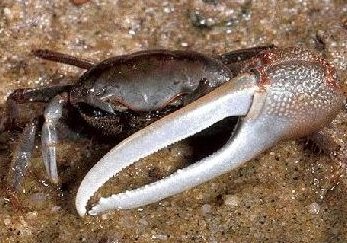
"The adjective chelate, derived from the great claw or chele (Greek) of the lobster or other crustaceans, is suggested for the caliperlike groups which function as two associating units and fasten to the central atom so as to produce heterocyclic rings."

And below is the article. Unfortunately, it is behind a paywall. 


Obviously, I had to look for what "chele" (chela) looks like:


I also found some useful definitions for some terms here in the same article above although I've never heard some of them:


Saturday, March 1, 2014

Book: Introduction to Metal Pi-Complex Chemistry

As the title states clearly, this book is about the metal and pi-complex interactions. It starts with the history of metal pi-complexes. The first metal pi-complex was Zeise's Salt. But, until the characterization of ferrocene, it did not receive much attention. 

The following chapters include the preparation, reactions, spectroscopic and magnetic properties of the complexes. There is a very short chapter on Crystal Field Theory, Valence Bond Theory and Molecular Orbital Theory too. 

What I like the most about the book is that it provides very simple methods for the preparation and reactions of these complexes. There are around 20 different reactions of ferrocene and ferrocene derivatives. 

The book I have is a 1970 edition and it looks like there is a 1995 edition on amazon. It's worth buying.


Friday, February 21, 2014

#realtimechem (9 AM) precipitation

Another reason to love chemistry. Isn't it magic?


Life...

In case anyone is reading this blog, I just got caught up with life again. There are decisions to make and a road ahead. I need lots of thinking and planning.

Tuesday, February 18, 2014

Did R.S.Mulliken sign and write in this book?

As I said in this post, I ordered a copy of "Electrons and Chemical Bonding" by Harry B. Gray and I have just received it. When I opened the first page, I saw this:


First thing I thought was if the signature belongs to R.S. Mulliken or not. I tried to find his signature on google images and these are the most relevant images:


First of all, I want to believe that the signature belongs to him. 

I love buying used books and one of the reasons is that I like reading the notes of the previous owners. There is a good chance that the signature is fake or the signature belongs to Mulliken but the notes do not. Still, it is an interesting day for me. I hope chemists (and physicists) and historians of chemistry(and physics) help me to find out the truth.

But the story is not finished yet. The book is full of notes, questions, comments, arrows etc. It is obvious whoever took notes on this book is someone who knows chemistry and physics enough to notice details and ask questions. But, I can not read most of the notes since they are written in a kind of handwriting. I am sure any native English speaker can read them easily though. Here are some of them:


Monday, February 17, 2014

#chempaperaday Day 31/365: "A platinum complex that binds non-covalently to DNA and induces cell death via a different mechanism than cisplatin"

This article is an open access article about a Pt(II) terpyridine complex and its interaction and binding mode with DNA. 


The studies showed that the complex can enter the cell nucleus and interact with DNA in a non-covalent manner. They also found that the complex has a selective cytotoxicity towards certain cancer lines.

I have been trying to follow metal complex-DNA interaction papers. But, looks like I missed this one. It's a great study. But, I would like to know why there is no x-ray data.


My reading list (89 books in my Amazon shopping cart)

So, I decided to post the list of the books (including textbooks)in my amazon shopping cart. I think it is a good reading list that other people can find something interesting too. Note that the order is not an order of importance. I tried to keep them in order of chemistry, biology, popular science books etc., but then I got tired. Maybe I will organize them later.


1. The Mechanisms of Reactions at Transition Metal Sites

2.  Inorganic Spectroscopic Methods

3. NMR Spectroscopy in Inorganic Chemistry


4. Introduction to Quantum Theory and Atomic Structure

5. Biocoordination Chemistry 


6. The Ten Most Beautiful Experiments


7. d-Block Chemistry


8. The Kaiser Wilhelm Society under National Socialism


9. Neither Physics nor Chemistry: A History of Quantum Chemistry


10. Advanced Chemistry (Advanced Science)


11. The Improbability Principle: Why Coincidences, Miracles, and Rare Events Happen Every Day


12. Inorganic Syntheses (Volume 35)  


13. The Biology of Cancer


14. Basic Physical Chemistry: The Route to Understanding


15. Metals in Cells


16. The Billion Dollar Molecule: One Company's Quest for the Perfect Drug


17. Physical Chemistry for the Chemical and Biological Science


18. Bringing Chemistry to Life: From Matter to Man


19. The Chemistry of Evolution


20. Oxygen: A Four Billion Year History


21. From X-rays to DNA: How Engineering Drives Biology


22. The Story of Earth: The First 4.5 Billion Years, from Stardust to Living Planet


23. Your Inner Fish: A Journey into the 3.5-Billion-Year History of the Human Body


24. Only a Theory: Evolution and the Battle for America's Soul


25. Evolution, Second Edition


26. Madame Curie: A Biography


27. The Monkey's Voyage: How Improbable Journeys Shaped the History of Life


28. The Theory of Intermolecular Forces


29. Cells to Civilizations: The Principles of Change That Shape Life


30. Introduction to Coordination Chemistry


31. Metal Complex - DNA Interactions


32. Metallomics and the Cell


33. The Secret of Scent: Adventures in Perfume and the Science of Smell


34. The Emperor of All Maladies: A Biography of Cancer


35. Gertrude Elion: Nobel Prize Winner in Physiology and Medicine


36. Handbook on Metalloprotein


37. Interrelations between Essential Metal Ions and Human Disease


38. Metals and Life


39. The Third Man of the Double Helix: The Autobiography of Maurice Wilkins


40. The Drug Book: From Arsenic to Xanax, 250 Milestones in the History of Drugs


41. Coordination Chemistry in Protein Cages: Principles, Design, and Applications


42. Mendeleev on the Periodic Law: Selected Writings, 1869 - 1905


43. Periodic correlations (The Physical Inorganic Chemistry Series)


44. Metals in Medicine


45. The Logic of Life

46. Chemistry - The Impure Science


47. Medicinal Inorganic Chemistry


48. The Annotated and Illustrated Double Helix


49. What Mad Pursuit: A Personal View of Scientific Discovery


50. The Plutonium Story: The Journals of Professor Glenn T. Seaborg 1939-1946


51. The Immortal Life of Henrietta Lacks


52. Letters to a Young Chemist


53. The Dark Side of the Enlightenment: Wizards, Alchemists, and Spiritual Seekers in the Age of Reason


54. The Secrets of Alchemy (Synthesis)


55. Distilling Knowledge: Alchemy, Chemistry, and the Scientific Revolution


56. Life's Ratchet: How Molecular Machines Extract Order from Chaos


57. SPECTROSCOPIC METHODS IN ORGANIC CHEMISTRY


58. Euler: The Master of Us All


59. Why Chemical Reactions Happen


60. Metallointercalators: Synthesis and Techniques to Probe Their Interactions with Biomolecules


61. Problems in Quantum Mechanics


62. Molecular Symmetry and Group Theory


63. Modern Physical Organic Chemistry


64. The Making of the Atomic Bomb: 25th Anniversary Edition


65. Stalin and the Soviet Science Wars


66. Why Does E=mc2? (And Why Should We Care?)


67. Albert Einstein's Vision: Remarkable Discoveries That Shaped Modern Science


68. Quantum: Einstein, Bohr, and the Great Debate about the Nature of Reality


69. Big Bang: The Origin of the Universe (P.S.)


70. Thirty Years that Shook Physics: The Story of Quantum Theory


71. QED: The Strange Theory of Light and Matter


72. Einstein: His Life and Universe


73. Benjamin Franklin: An American Life


74. Tesla: Man Out of Time


75. Radioactive: Marie & Pierre Curie: A Tale of Love and Fallout


76. Darwin: Portrait of a Genius


77. Marie Curie and Her Daughters: The Private Lives of Science's First Family


78. American Prometheus: The Triumph and Tragedy of J. Robert Oppenheimer


79. Uncle Tungsten: Memories of a Chemical Boyhood


80. The Clockwork Universe: Isaac Newton, the Royal Society, and the Birth of the Modern World


81. The Strangest Man: The Hidden Life of Paul Dirac, Mystic of the Atom


82. My Inventions: The Autobiography of Nikola Tesla


83. Erwin Schrodinger and the Quantum Revolution


84. The Los Alamos Primer: The First Lectures on How To Build an Atomic Bomb


85. The Science of Leonardo: Inside the Mind of the Great Genius of the Renaissance


86. Galileo: Watcher of the Skies


87. Gödel, Escher, Bach: An Eternal Golden Braid


88The Red Queen: Sex and the Evolution of Human Nature