Showing posts with label science. Show all posts

Friday, July 7, 2017

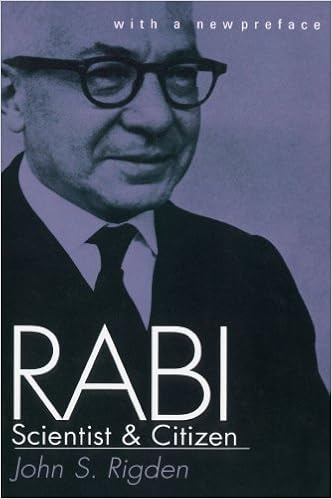
Book: Rabi, Scientist and Citizen

I may be wrong but Rabi I think is one of the least known scientists even though he was one of the most important ones in the 20th century. He won the Nobel Prize for his discovery of nuclear magnetic resonance! In this book, you can find out how difficult it was do study the magnetic resonance in those years with the instrumentation they had. I still can't believe that people built their own instruments, came up with theories/techniques/experiments and did precise measurements! Because the book was written when he was alive and with his collaboration, there are lots of quotes from him. I will compile my notes and paste them here soon.


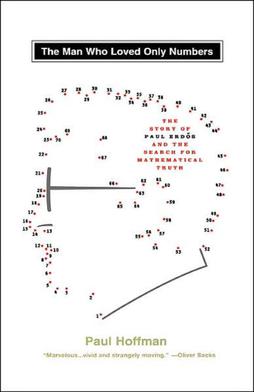
Book: The Man Who Loved Only Numbers: The Story of Paul Erdős and the Search for Mathematical Truth

The biography of Paul Erdos. Such an interesting genius. He didn't own much. He traveled all around the world to give lectures, solve problems and offer prizes for some really difficult problems in math. You can tell that he dedicated all his life to math only.

It was an easy read and I enjoyed reading it.

https://upload.wikimedia.org/wikipedia/en/d/d3/Man_who_loved_only_numbers_bookcover.jpg 


Thursday, March 10, 2016

Charles Darwin - not a genius?

A few weeks ago, we had to evacuate the department for some reason. As I was hanging around some old Science magazines, I found the Jan. 9, 2009 issue. It appears that it's a special issue dedicated to Charles Darwin and his famous book. I read several articles in this issue and I'm glad we evacuated the department.

Recently, I saw this ridiculous article "Charles Darwin was no 'heroic genius', say scientists". Thanks to modern day "science journalists", it was hard to find the original research article. Anyway, I was able to find the paper with some digging. I am not planning to read the paper since I have better and more useful things to do. Assuming that they do claim that Charles Darwin was not a genius and he was just someone who followed up a popular idea of his time, I am flat out going to say that I disagree. This brings us to the Science magazine I mentioned above. Please take a few minutes and read why he was special. Thanks to Peter J. Bowler there is an article in this issue with the title "Darwin's Originality". You'll find the answers you need there. I hope Dr. Michael Muthukrishna (the lead author of the claim above) who is I guess a psychologist will find some time to read this article and hopefully change his mind. Here is what he said to Telegraph :

"We can see this process at work when two people have the same apparently innovative idea at the same time – such as Charles Darwin and Alfred Wallace with the theory of natural selection."
Rather than being heroic geniuses, Darwin and Wallace were in the same ‘cultural milieu’, both reading the same books and both travelling to biologically diverse island environments.”  

Looks like it's that simple for Dr.Muthukrishna. Ridiculous.

Monday, February 8, 2016

Social media and science

I rarely write anything on "controversial" topics. A few days ago, I saw this interview was mentioned here and there. I usually don't read young scientists' interviews since I don't think I can learn much from them. How much experience they have anyway? Let's see what people especially didn't like about this interview:

- Do you think there is an increased need for scientists to market themselves and their science as a brand? 
I think the idea that scientists need to operate more like a business is becoming a major problem in science recently. There is science and there is business — they are different and should be fundamentally driven by different goals: one, the pure and unadulterated desire for greater knowledge and the other, monetary gain. Branding science puts focus on making your research appealing, which is extremely limiting, and — dare I say? — corrupts the scientifi c process. There is a lot of fundamental research that needs to be conducted that is not ‘sexy’. Such ‘science branding’ has not yet affected the Chinese Academy of Sciences and for that I’m grateful.

- What’s your view on social media and science?
For example, the role of science blogs in critiquing published papers? Those who can, publish. Those who can’t, blog. I understand that blogs can be useful in affording the general public insights into current science, but it often seems those who criticize or spend large amounts of time blogging are also those who don’t generate much publications themselves. If there were any valid criticisms to be made, the correct venue for these comments would be in a similar, peer-reviewed and citable published form. The internet is unchecked and the public often forgets that. They forget or are unaware that a published paper passed rigorous review by experts, which carries more validity than the opinion of some disgruntled scientist or amateur on the internet. Thus, I find that criticism in social media is damaging to science, as it is to most aspects of our culture.

I completely agree with the first paragraph. At least for me, fundamental science is much more important than anything that you can think of (money, fame, 10000 followers etc.). People who know me in real life witness this pretty much every day. It's also clear that some people use social media to market their names and research. While I understand most of the reasons, I don't accept it.

When it comes to second paragraph, I can't say I totally agree. Yes, it's true there are a lot of people whose sole purpose is to criticize ANYONE and they usually do this as a group of like minded "scientists." But, if I were the scientist being criticized, I'd just ignore and let them talk. Would I ever answer? No. So, I think scientists shouldn't care what others say about them. After all, "What Do You Care What Other People Think?"

Finally, it's partly true that "Those who can, publish. Those who can’t, blog." I applaud Jingmai O’Connor for being honest. We need more people like her who can say what they think.


Sunday, November 29, 2015

Energy from Heaven and Earth - Book

I am behind in book reviews here. I have finished this book a few months ago but never got the chance to write my thoughts about it. 

The book is actually a collection of Edward Teller's 1975 lectures. He gave a series of lectures as a part of his Harvey Prize requirement.

The dedication on the first page actually was a big surprise to me. Teller dedicated the book to N. A. Rockfeller saying that "..whose vision and initiative, had they only been followed, would have made this book unnecessary." 

There are 5 "parts" in the book each of which consists of several chapters. I really like the way the chapters are arranged. They follow a nice logic: from simple to difficult; from past to future. 

In these chapters, especially in the beginning, you can get a nice summary of how the universe started and the origin of energy. I don't think it's too technical. I believe anyone can easily understand the nuclear reactions and how they yield energy with Teller's excellent explanations. 

If you follow the news and read a little bit of science, people constantly talk about global warming, record CO2 levels etc. I believe this book will help you to ask more scientific questions and evaluate the data and plans in a more scientific way. Should we focus on environment first or on improving our living standards? Can we get enough energy from sun, wind, waves? Ethics vs. science? You can find some clues to these dilemmas. I have to say I am with Teller on many issues.

I strongly suggest people read this book. Even though it was written in 1980, it is still much more relevant to 2015 than many more "popular" scientists' thoughts. 

It is also interesting to read his thoughts on bacteria that converts biomass into fuel, solar cells and devices like photoelectric cells. 

Some quotes:

In a peculiar way I am indebted to the antinuclear forces that staged the great nuclear debate of 1976 in California. Confucius said that if you walk between a wise man and a foolish one, you should learn from both.
I do not advocate a nuclear option. I believe that nuclear energy is an important component of the solution.

The next ice age may well arrive in five thousand years, unless technology finds a way to prevent it.

In the beginning there was matter and heat but no usable energy.

Geothermal energy....this source is no more abundant than coal. We may exhaust it in a few centuries.

Gloomy stories we may hear about out dying planet are most likely wrong.

How do living plants turn into fossil fuels? I have gone to the best geologists and the best petroleum researchers, and I can give you the authoritative answer: no one knows.

Environmentalists may take notice that small is not necessarily beautiful or clean.

Arabs reputedly cannot agree with anybody, least of all with other Arabs.

If one wastes energy, one should pay for it.

California is the most ultra-American of all American states. California's waste is prodigious. 

Electricity ...the most expensive form of energy.

Minimizing energy input is not the main purpose of industry.

It has been remarked that Moses managed to find the only spot in the Middle East where there is no oil.

In today's climate opinion, to be big is to be unpopular.

King Coal has lost his throne to the Sheikhs of Araby.

..a coal-burning electric generating station is apt to emit more radioactivity than a corresponding nuclear plant.

[about CO2] there is possibly not enough oil in the world to make a real difference.

Szilard told me "I found the neutrons"

The alchemists proved that secret science is no science. In the long run we cannot keep secrets, and we should not try.

If scientists consider themselves an elite with responsibility for the world resting on their shoulders, they will no longer be scientists.

The scientist's prime responsibility is scientific knowledge. The scientist's second responsibility is to turn knowledge into practical applications. Finally, the scientist should explain his findings so that everyone can understand. The nonscientific world then can choose to use or misuse the new knowledge.

Best earthquake experts in the US. are found among the members of Jesuit order.

To prophets of the apocalypse, reactors are precursors of the end of the world.

It seems that even in California the nuts are in a minority.

We have not yet gotten to the point where we are willing to sacrifice a tourist attraction to our economic needs.

The very word "patent" means the opposite of secret. But our present patent law is archaic.

Wednesday, November 18, 2015

"10 Start-Ups To Watch" but why C&EN?

I usually don't write posts on debatable topics, but this article and a following Reddit AMA caught my attention. Before I write anything, I should mention that I am in no way related to anyone involved in the article or any of the people in those companies. I have also never interacted with any person involved so I am at a pretty safe position to write what I think.

While I understand C&EN is a Chemical and Engineering News agency/organization; I don't understand why these 10 companies were selected and they were (obviously) promoted. C&EN is free to do anything they want, but if I ran an organization like that I wouldn't highlight these companies the way it was done (especially I wouldn't do a Reddit AMA to endorse them even further). I had seen similar articles in several other science magazines or blogs where someone (usually who knows the author), picks up a company/paper and writes a "post"; but this is the first time I noticed it in C&EN. Most of these yield to more public attention and the author/owner somehow benefits from it. I have my own values, while I understand science needs to be promoted especially to get funding, I will never let my own research to be covered by ANY news agency as long as I have the power to do so. I can write my own article, and if someone wants it, go ahead and paste the whole thing. Good luck with that. 

Thursday, October 8, 2015

Why Combustions Are Always Exothermic ? #chempaperaday 235

A very simple question, but incredibly hard to answer without thinking about it. In fact, I don't think I can give a correct answer without looking up. Even then, I would probably be wrong. Luckily, this great article will help me in the future. It gives enough evidence and answers simple questions like "why fire is hot regardless of the fuel" and "why in spite of its high bond enthalpy, O2 is abundantly present in our atmosphere.?"


I printed this article and I will keep it as a reference and educational source for my own purposes.

Friday, May 29, 2015

A Career in Catalysis: John E. Bercaw #chempaper 221

This is a great "Account" highlighting John Bercaw's career and success. If you are in inorganic chemistry, it is very often that you will see his papers cited or his work is mentioned in many papers. If you are doing organometallic work, you will always find some help in his work. 

Friday, May 1, 2015

Targeted delivery of platinum-based anticancer complexes #chempaper 214

Platinum based anticancer drugs are widely used in several types of cancers. One of the problems using these drugs is the toxicity and efficient delivery of the complexes. People have been studying different drug delivery methods and this article summarizes tens of them.

http://www.sciencedirect.com/science/article/pii/S1367593113000057


Monday, April 27, 2015

Is there a common chemical model for life in the universe? #chempaper 212

Fantastic article on what life is and whether we can find it elsewhere. Biology and life itself drives me crazy and I want to see the discovery of other or similar life forms before I die. The authors ask all the questions you could possibly ask. If you are one of those who ask "Why?" a lot, this article is definitely for you.


http://www.sciencedirect.com/science/article/pii/S1367593104001358


Why 20 amino acids?
Why 4 DNA bases?
Why carbon?
Why water?
Could any other solvent support life?
and tens of other questions are really well explained here. The references are so great that I will probably end up reading 50 of them.

Thursday, April 23, 2015

Book: The Kaiser's Chemists: Science and Modernization in Imperial Germany

This book is a great source on the history of chemistry and its relation with politics, governments and of course war. 


By the end of the 19th century, some German chemists (Emil Fischer -"a pillar of militarized science" in particular) started to think that they were losing their position in chemistry (especially in inorganic chemistry) to the US. "We must do more for inorganic and general chemistry again, if we are not to be put to shame by other countries."
 
Fischer and several other chemists decided to convince the Kaiser to fund chemistry and open new labs. What they had in mind was a large research facility with the most modern equipment. So, it took years and a lot of PR to convince companies and the Kaiser himself to open these research centers. Not surprisingly for those years, about half of the funding came from Jewish businessmen (you can read the reasons in the book). These centers, in turn, brought much success to Germany and tens of Nobel Prize winners. 


The best part of the book in my opinion is that it allows you read the discussions among academicians and politicians regarding the importance of funding, research ideas and commercial applications of the products. Just like today, many chemists believed that chemistry was no longer a career or how little chemists were respected. There were also fights among several professors on why there were few positions (or too many chemists). On the other hand, there were chemists telling that there were too many professors at upper ranks. Professors complaining about teaching duties... Basically, everything was exactly the same as today.

There are also so many details that I didn't know about such as the rivalry between Nernst and Haber, Willstatter's research interest in photosynthesis in the living leaf, Einstein's pacifist letter with only 4 signatures and Fischer's wish for Haber's tests "failure from the bottom of my patriotic heart"

Some interesting quotes:

"Science did not escape the rise of nationalism but adapted to it.

[Ostwald] it was not frequently claimed that I was no chemist, because I never produced a new substance.

Big science, like big industry, needs operating capital.

Standstill is retreat (Duisberg).

As an Austrian women, a Jew and a physicist, Meitner's presence meant little to the German chemists....with the nonposition of unsalaried "guest".

[A university professor] is freer, because he can replace many assistants by students and doctoral candidates.

[Harnack] our enemies...brought German science and military strength as close together as possible.

[Liebknecht] science and research in uniform have hardly ever done good.

...the war converted him [Ostwald] virtually overnight, to an ultranationalist. "


Sunday, April 5, 2015

Pauling's Left-Handed alpha-Helix #chempaperaday 209

Left-handed alpha-helices are not common. In fact, I was able to find only one example with my limited search attempts although I am sure there are many more. There are stereochemical issues, bond distance and dihedral angle restrictions if nature or  you want to make one of them. So, when I first saw the title, I did not want to believe that Pauling proposed a left-handed alpha-helix. I thought he just made a mistake in one of his books or papers. If you read the paper, you will see that this is not the case. For some reason unknown to us, he drew this helix. As the paper explains, in fact he made an arbitrary assignment to R groups when he first reported "the structure of proteins."


But, as the author explains in detail, he should have known the absolute configuration of the amino acids. In fact, his colleagues at his own department were doing research on the subject. So, he should definitely have known much more about his "incorrect" assignment. You can read the article and learn more about the issue. My own understanding is that he was not in close communication with his faculty members in those years due to the political troubles he had had. Maybe the people who really knew the absolute configuration did not correct him on purpose, or he did not want to be corrected by one of those people who were not on his side when he needed support. But, I don't think he was simply not "interested in the problem of absolute configuration." I think this is contrary what we know about his scientific curiosity and genius.

The author is Jack D. Dunitz who is a giant in his field and you may know his name if you can remember Burgi-Dunitz angle.

Saturday, April 4, 2015

At Least 60 Years of Ferrocene: The Discovery and Rediscovery of the Sandwich Complexes #chempaperaday 207

This is probably one of the most interesting and surprising articles I have read. 


I guess all inorganic/organometallic chemists know (I hope) the story of the discovery of ferrocene and other sandwich complexes. It all starts with Pauson and Kealy's Nature papers on the discovery of an unusually stable compound ("What was this remarkable substance we had made?") and goes on. I will not go into the story. If you want to learn, you should read this paper and many other historical papers on these compounds. Later, it turns out that in fact they were not the first people to discover this compound. Many other people had already seen this complex but they simply did not report it. The compound gets attention from several chemists including Woodward, Fischer and Wilkinson. In fact, the name ferrocene was given by Woodward. Soon, the competition between Fischer and Wilkinson started. They literally divided "the periodic table between them".

This is an incredibly well written story. The most interesting two things for me are the comments of a reviewer and Woodward's comments on the Nobel Prize in Chemistry.

First, the referee writes to Woodward "We have dispatched your communication to the printer but I cannot help feeling that you have been at the hashish again."


Secondly, Woodwards writes to the committee on the Nobel prize saying "...I am sure-committed a grave injustice...Both of these concepts were simply, completely, and entirely mine, and mine alone." wow!

Michele Peyrone, Discoverer of Cisplatin #chempaperaday 205

Cisplatin is a very effective anticancer drug especially against testicular cancer. It is also probably one of the most important metal complexes that opened a new research area for developing anticancer drugs. Its biological activity was discovered accidentally by Barnett Rosenberg and colleagues and it was approved by FDA in a very short time compared to any other drugs. 


Anytime you read a biochemistry or bioinorganic chemistry paper about metal anticancer complexes (covalent ones especially), you can read a very similar introduction. But, some of them also mention that the complex was synthesized almost 100 years prior to its "fame". Cisplatin was first synthesized by Michele Peyrone in 1844. Knowing nothing about isomerism of course, Peyrone described the physical properties of the compound and hypothesized its forming. It was then named as Peyrone's  Chloride.  I found it very interesting that Peyrone worked under Justus von Liebig. Later, Peyrone focused on agricultural chemistry and did not pursue his studies on platinum compounds.

The article is written by four authors and the name George B. Kauffman caught my attention of course. I know his writings very well and try to read as many as possible. 

It was good to know Michele Peyrone closer and I suggest you do the same.


Thursday, April 2, 2015

Book: "Linus Pauling and the Chemistry of Life"

I said it before and I will say it again. Linus Pauling deserved to win 3 unshared Nobel Prices in chemistry. In any field of chemistry, you can see his impact. He's always there.


This book is probably the best biography of Linus Pauling. I opened the book a very late time at night and I just couldn't stop reading it until I finished and I wish it had not finished. Such an amazing storytelling. I knew a lot about his life even before reading the book, but I still learned a lot. I knew he had trouble with government but I did not know that FBI investigated him for 24 years and some of the funding agencies cut his research funding. He had really hard time finding a place to work! What a shame. How unfair! 

There is no other chemist that revolutionized chemistry and medicine as much as he did. He was a true genius and it's a shame that for decades he was alienated by his colleagues and his government.

Wednesday, April 1, 2015

Book: "The Devil's Doctor"

Since I discovered Philip Ball and his writings, I have been reading everything he produces. In my opinion, he is by far the best science writer. I am also interested in reading everything about Paracelsus since I consider himself one of my heroes in science and medicine no matter what people think about him. I think he played a very important role in modernization of chemistry and medicine. 

If you think this book is an ordinary biography, you are mistaken. The book is really well written with the most interesting stories and endless journeys of Paracelsus. You will not only read his life, his work and trips; but also the political and religious environment of his age. 


If you ever read anything about Paracelsus, you probably know that he traveled almost anywhere accessible in 16th century to learn how different people fight the diseases. He was outspoken, and he had "extreme" ideas and sometimes practices that gave him trouble. To him, schools were not really the only places that you can learn a profession: "At all the German schools, you cannot learn as much as the Frankfurt fair." Traveling was so important for him that once he said "If a man wishes to recognize many diseases, let him travel." 

I think the book is a fascinating work on Paracelsus. Unlike several other books, the book does not have a fixed idea on Paracelsus' character or whether we should take him seriously or not. This makes the book even more special by allowing us to have our own opinion.

I strongly recommend this book for science, medicine, philosophy, philosophy of science and chemistry enthusiasts. My personal opinion is that Paracelsus was a great man and scientist and we owe him a lot. Since I first heard of his name when I was a little boy, I always felt very close to him. What I like him the most as Philip Ball says "always he was no one's man but his own."


Saturday, March 21, 2015

"A Nickel(II)–Sulfur-Based Radical-Ligand Complex as a Functional Model of Hydrogenase" and the "controversy" #chempaperaday 197-199

The first paper came out in 2010 and reported synthesis and characterization of a Ni(II)-dithiolene complex. The authors formulated the compound as NiII(L2−)(L−.)][PPh4] and claim that complex "shows strikingly similar EPR and reduction potential values to those observed with native Ni-containing hydrogenases." I should mention that CV of the compound was reported in MeCN. You can read the paper and ask questions, but the most interesting thing they did not provide a proton NMR spectrum for this paramagnetic compound. But, they assigned a signal at 4.1 ppm to a S-H. Interesting.

Anyway, shortly after a "comment" was published  and proposed a new oxidation state assignment for the Ni atom and the ligand. A "Response" followed and honestly I don't think they added any new evidence or supporting argument for their own assignment.

I still think, they are worth reading.

Sunday, March 8, 2015

Book: The Violinist's Thumb

I got this book as a gift. As I read The Disappearing Spoon by the same author before, I was expecting it would be as entertaining and interesting as it was. I think this is a good book to read, but if you already know some about biology, genetics, genes and some evolution; I don't think you will learn much. I read it quickly and I liked it (3 stars). There are several interesting stories, but in my case, I knew most of them. Anyway, I still think it is worth reading since there are a lot of names and details. Also, you will have a lot to learn if you do not know much about science.


Sunday, February 8, 2015

"Synthesis, Characterization, and Structures of a Persistent Aniline Radical Cation" and the controversy #chempaperaday 183-186

The recent controversy and discussion starts with the publication of the report of a stabilized aninile radical cation.


Here the authors claim that they were able to stabilize the radical cation and report x-ray structures, electrochemical studies and some EPR data.

Shortly after this paper, two comments appear:

Comment on “Synthesis, Characterization, and Structures of Persistent Aniline Radical Cation”: It Is a Protonated Aniline and Not an Aniline Radical Cation

and 

Comment on “Synthesis, Characterization, and Structures of a Persistent Aniline Radical Cation”: A New Interpretation Is Necessary

The commenters try to replicate the experiments and they basically say that it is not an aniline radical. They have some detailed studies and explanations.

Finally, the original authors publish a reply to those two comments here:

Reply to Comments on “Synthesis, Characterization, and Structures of Persistent Aniline Radical Cation”

The problem with the "reply" is that they accept some of their "mistakes" and claim that they obtained the aniline radical cation. But, they can't really clarify some of the other concerns that the commenters pointed out.

Really interesting read.

Wednesday, January 28, 2015

Book: Regenesis: How Synthetic Biology Will Reinvent Nature and Ourselves

George Church is a great mind and scientist. I had the chance to listen to his talk in Museum of Science last year. So, when I saw the book by him, I didn't even hesitate one second. I knew it would be a great read. After reading it, I can say I was absolutely right. Whether you like biology or not, whether you know some biology or not, you should read the book. It is not only a book about synthetic biology and the future of it, it is also about humanity, the fate of humans and our society.

"Imagine a future in which human beings have become immune to all viruses, in which bacteria can custom-produce everyday items, like a drinking cup, or generate enough electricity to end oil dependency. Building a house would entail no more work than planting a seed in the ground. These scenarios may seem far-fetched, but pioneering geneticist George Church and science writer Ed Regis show that synthetic biology is bringing us ever closer to making such visions a reality. In Regenesis, Church and Regis explore the possibilities—and perils—of the emerging field of synthetic biology. Synthetic biology, in which living organisms are selectively altered by modifying substantial portions of their genomes, allows for the creation of entirely new species of organisms. Until now, nature has been the exclusive arbiter of life, death, and evolution; with synthetic biology, we now have the potential to write our own biological future. Indeed, as Church and Regis show, it even enables us to revisit crucial points in the evolution of life and, through synthetic biological techniques, choose different paths from those nature originally took. Such exploits will involve far more than just microbial tinkering. Full-blown genomic engineering will make possible incredible feats, from resurrecting woolly mammoths and other extinct organisms to creating mirror life forms with a molecular structure the opposite of our own. These technologies—far from the out-of-control nightmare depicted in science fiction—have the power to improve human and animal health, increase our intelligence, enhance our memory, and even extend our life span. A breathtaking look at the potential of this world-changing technology, Regenesis is nothing less than a guide to the future of life."


The above paragraph is straight from the Amazon webpage for the book. I had to quote it because I can't write anything better than that. It's an easy to read book so I am pretty sure anyone who has 3-4 hours on a weekend will easily finish reading it. You will not only learn how synthetic biology can change our future but also how important it has become in our lives without even realizing it. Moreover, if you want to be an entrepreneur in biotech there are tens of examples of them; how they were founded, how and why they succeeded (or didn't), the challenges and even future directions.

Before you look up for the definition of synthetic biology, let's see how George Church describes it:

"the science of selectively altering the genes of organisms to make them do things that they wouldn;t do in their original, natural, untouched state."

As usual, I have quotes :

"Creating a mirror world might give us a fresh lease on life, one free of disease and unwanted agricultural pest species."

"...species that are lowest in diversity are most vulnerable to extinction."

"Give me a selection, and I will change the world."

"Multicellularity tends to come with a hard consequence-you give up your immortality."

"...just as individuals respond differently to drugs and to pathogens, they also respond differently to information."

"What should we do? Doing nothing, or doing what is traditional or natural, is not even close to a recipe for survival. If we choose tomorrow to behave in a way that our primitive ancestors did, nearly all of our 7 billion humans will die."